
TL;DR
- In nearly every Illinois city and village, the sewer line from your foundation to the public main is the homeowner’s responsibility.
- Your city or village maintains only the public sewer main, not the line on your property.
- In Montgomery, Aurora, and Oswego, Fox Metro Water Reclamation District handles sewer treatment, which changes who you call first.
- Sewer line repair runs into the thousands, and a standard homeowners policy usually will not cover the most common causes of failure.
The first sign is almost never dramatic. A basement floor drain gurgles during a load of laundry, then backs up a little. A week later it backs up a lot. Somewhere in there, most homeowners make the same reasonable assumption: the sewer is the city’s job.
The pipe carrying waste from your house out to the public main is called a sewer lateral. Part of why the confusion runs so deep: you pay a sewer bill every month, so the whole system feels like somebody else’s problem. The lateral is buried and easy to forget until the day it fails. By then, who is responsible for sewer line repair in Illinois is not a trivia question. It is a bill.
What follows is the practical version: where your responsibility starts and stops in the Fox Valley, who to call first, what the repair actually costs, and whether insurance will help.
The Short Answer: In Illinois, Sewer Line Repair Is Almost Always Yours
The answer comes down to a single dividing line: the point where your pipe meets the public sewer main. Everything on your side of that connection is yours to maintain and yours to repair. Everything past it belongs to the city or village.
That private line has a name worth learning, because a plumber or a village clerk will use it without stopping to explain it. It is called your sewer lateral, and a plumber may split it into an upper and a lower section. Here is the whole picture, from your foundation to the pipe under the street.
- Upper lateral. Runs from your foundation out to your property line, usually near the sidewalk or curb. Clearly on your land, clearly your bill.
- Lower lateral. Picks up at the property line and continues under the sidewalk and street to the connection at the main. This is the part homeowners get wrong.
- Public sewer main. The large pipe under the street carrying waste from your whole block toward treatment. This one is the city’s.
The lower lateral is where the arguments start. It sits under public ground, so it feels like public property. That is one of the most common misunderstandings about sewer repair, and it is an expensive one to learn the hard way. Fox Metro Water Reclamation District, which handles wastewater treatment for Montgomery, Aurora, and Oswego, draws no such distinction: homeowners are responsible for their sanitary service lines and for the connections to the public mains. The whole run, foundation to street, including the tie-in.
A few Illinois towns do split the cost of work done in the public right of way, and Elgin is one of them. That is the exception, not the rule, and it is worth knowing whether your town has a program before you accept a quote.
Who to Call First When the Drain Backs Up (It Might Not Be a Plumber)
Here is the part that saves people money: your first phone call should usually be free. Find out whose pipe is blocked before you pay someone to tell you.
Count How Many Drains Are Backing Up
One slow drain while the rest of the house runs fine is almost always a clog in that fixture. When several fixtures back up at once, especially the lowest drains in the house, the blockage is further out and may be sitting in the public main.
Make the Free Call First
Inside city or village limits in Montgomery, Aurora, or Oswego, call your public works department and they will investigate the main. In unincorporated Aurora or Oswego Township, call Fox Metro instead. North Aurora, Sugar Grove, and Yorkville run their own public works departments for main-line problems.
If the Main Is Clear, the Line Is Yours
Then the repair is on you, and rushing it costs money. The district recommends getting two or three quotes, and their engineering staff will review your camera footage and tell you what they see.
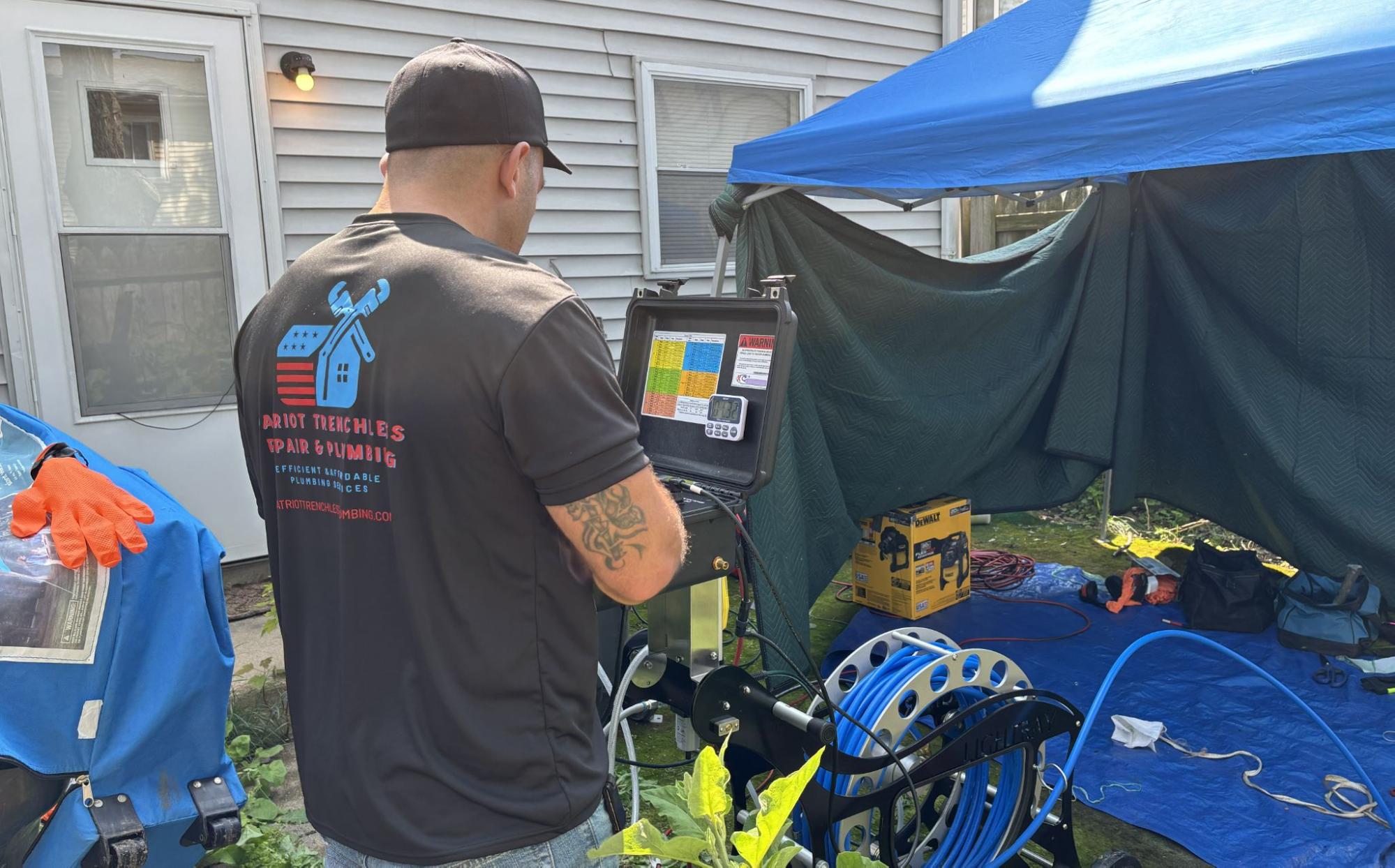
Paperwork matters here too. A no-charge repair permit has to come from Fox Metro’s engineering department before work starts, the contractor needs a current license and permit bond on file, and an inspection happens before anyone backfills the hole. Patriot Trenchless Plumbing is veteran-owned and owner-operated, and handles trenchless sewer repair in Montgomery and across the Fox Valley by that book, not around it. A contractor who calls permits optional is telling you something.
Sewer Line Responsibility by City Across the Fox Valley
The ownership answer does not change from town to town. In all six cities below, the line from your foundation to the main is yours. What changes is the paperwork, and in one case, whether you can get some of your money back.
| City | Permit Before You Dig | Worth Knowing |
|---|---|---|
| Montgomery | Village permit, plus Fox Metro’s no-charge repair permit | Village requires a licensed Village contractor and a JULIE 811 locate |
| Aurora | Fox Metro repair permit, no charge | The city routes sewer work to Fox Metro rather than handling it in-house |
| Oswego | Fox Metro repair permit, no charge | Fox Metro names tree roots the top cause of backups, with Boulder Hill a hotspot |
| Naperville | City plumbing permit | The city inspects your sewer line before it issues the permit |
| Elgin | City permit, plus inspection before backfill | Runs a reimbursement program for right-of-way repairs |
| St. Charles | City permit through Building and Code Enforcement | Handled by the city, not a separate utility district |
Elgin is the outlier worth chasing. Its Sewer Lateral Assistance Program reimburses half the cost of right-of-way repairs, currently capped at $5,000, but the money is budgeted one year at a time and given out first come, first served. Elgin asks homeowners to call the utilities department before any work starts to confirm funds are still there, so make that call part of the plan rather than an afterthought.
One thing every city here shares: somebody has to inspect the work before the hole gets filled back in. Skipping that step is how a cheap quote turns into a repeat excavation.
Yorkville handles its sanitary sewer separately from the Fox Metro communities above, so start with the city before you dig.
What Sewer Line Repair Costs, and How Trenchless Changes the Math
Digging up and replacing a full sewer lateral is the expensive version, and the pipe itself is not what makes it expensive.
Industry cost guides put Chicago-area sewer line replacement somewhere between $6,000 and $20,000. That range covers a lot more than new pipe. When a crew opens a trench across a lawn, a driveway, or a sidewalk, every bit of it has to go back afterward, and the restoration is often what pushes a quote past what a homeowner planned for.
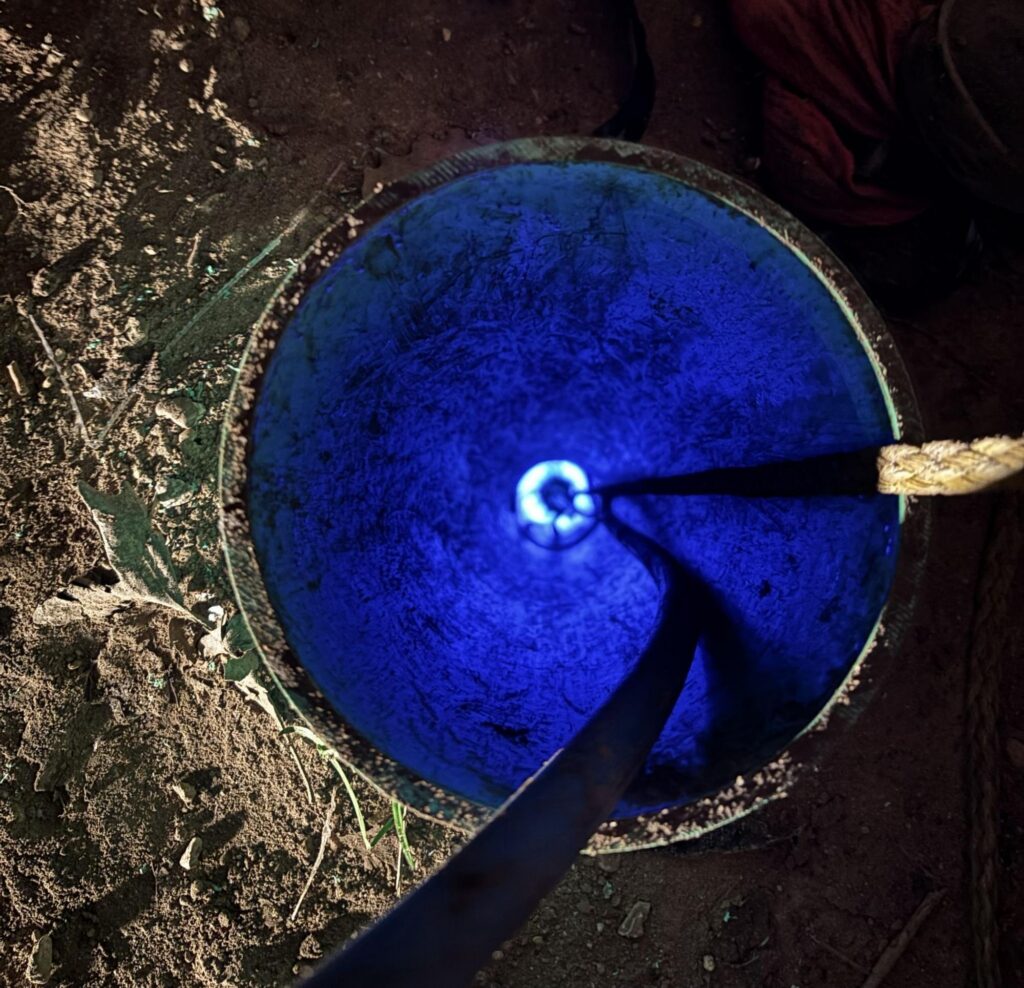
Trenchless work avoids most of that damage. Trenchless sewer lining cures a new pipe inside the old one through small access points, so the yard largely stays where it is. When a line is collapsed or too far gone to line, pipe bursting pulls a replacement through the same path instead.
Which method your pipe needs is not something to guess at. A camera inspection answers it, and it is worth doing before you accept anyone’s quote.
Will Homeowners Insurance Cover Sewer Line Repair?
Usually not, and the exclusions land on exactly the things that break sewer lines. Standard policies are written for sudden, accidental damage, so root intrusion, corrosion, and ordinary wear are typically left out, and those three account for most lateral failures. Real coverage comes as a separate service line endorsement, which is one of the less expensive add-ons available. The catch is timing. A 2024 Nationwide survey found 32% of homeowners assume that coverage is already in their policy while only 8% of Nationwide policies actually carry it, and it can generally only be added at renewal, not after the basement floods. Worth checking your declarations page before you need it.
Sewer Line Responsibility Questions Fox Valley Homeowners Ask
If the blockage is in the public main, who pays for that?
The city, village, or Fox Metro does, depending on where you live. Once crews confirm the blockage sits in the main, clearing it is their job and their cost. Your expenses only start if the trouble turns out to be on your side of the connection.
A neighbor’s tree roots broke my sewer line. Who is responsible?
You are. Ownership follows the pipe, not the tree, so a lateral damaged by roots from next door is still the property owner’s repair. Some neighbors work out a split on their own, but that is a private arrangement between them, not a rule anyone can hold them to.
How long should a sewer lateral last?
It depends on what it is made of, and Fox Valley housing stock skews old enough that plenty of laterals are past due. Clay tile and cast iron were standard through the mid-1900s, and Orangeburg, a tar-paper pipe used into the early 1970s, fails soonest of the three.
Can just the broken section be repaired, or does the whole line need replacing?
Sometimes a single crack in an otherwise sound pipe can be spot-repaired. The trouble is that most failing laterals in older homes are giving out along their whole length, so patching one spot mostly moves the next backup a little further down the pipe. Pipe bursting handles a line that is beyond saving.
Do I need to fix a sewer line that is not backing up yet?
Not always, but knowing its condition beats guessing at it. Cracks and root intrusion build quietly over years, and the gap between a repair you scheduled and one you did not is real money. A camera inspection tells you where the line actually stands.
If the blockage is in the public main, who pays for that?
The city, village, or Fox Metro does, depending on where you live. Once crews confirm the blockage sits in the main, clearing it is their job and their cost. Your expenses only start if the trouble turns out to be on your side of the connection.
A neighbor’s tree roots broke my sewer line. Who is responsible?
You are. Ownership follows the pipe, not the tree, so a lateral damaged by roots from next door is still the property owner’s repair. Some neighbors work out a split on their own, but that is a private arrangement between them, not a rule anyone can hold them to.
How long should a sewer lateral last?
It depends on what it is made of, and Fox Valley housing stock skews old enough that plenty of laterals are past due. Clay tile and cast iron were standard through the mid-1900s, and Orangeburg, a tar-paper pipe used into the early 1970s, fails soonest of the three.
Can just the broken section be repaired, or does the whole line need replacing?
Sometimes a single crack in an otherwise sound pipe can be spot-repaired. The trouble is that most failing laterals in older homes are giving out along their whole length, so patching one spot mostly moves the next backup a little further down the pipe. Pipe bursting handles a line that is beyond saving.
Do I need to fix a sewer line that is not backing up yet?
Not always, but knowing its condition beats guessing at it. Cracks and root intrusion build quietly over years, and the gap between a repair you scheduled and one you did not is real money. A camera inspection tells you where the line actually stands.
Know Where Your Line Ends Before It Becomes an Emergency
The pipe running from your foundation out to the main belongs to you, in Montgomery, in Aurora, in Oswego, and in nearly every other Illinois town. Learning that on a quiet weekday costs a lot less than learning it with three inches of water in the basement.
Patriot Trenchless Plumbing is veteran-owned and owner-operated, and the answer here is the same one we would give a neighbor: find out what shape your line is in before it decides for you. If you want to know what is actually down there, talk it through with our team.